
Best APS-C Cameras in 2026: 15 Picks Compared on Specs
Our top pick is the Sony a6700: a 26MP mirrorless with 4K video, AI-based subject recognition and a broad E-mount lens system. We matched 74 APS-C camera listings against a set of specification filters, then shortlisted 15 distinctly different models that cover entry-level DSLRs, vlogging mirrorless bodies and high-resolution workhorses. Each pick is chosen purely on the seller-stated specs, not on testing or user reviews.
14 picks from 20 cameras that match this guide with a price we can quote today, made by 32 makers. All prices are live and show when they were read.
Our picks in brief
Find your match
- For vloggers and content creators: You want a compact body with a flip screen, clean HDMI out and reliable autofocus for solo shooting. See pick 11
- For wildlife and sports shooters: You need fast burst rates, robust autofocus tracking and a deep buffer, often paired with a long telephoto lens. See pick 3
- For high-resolution landscape work: You value detail and cropping headroom, and you are comfortable processing large raw files. See pick 6
14 picks, up close
1 Best overall

Sony Alpha a6700 APS-C Mirrorless Camera Body 26MP 4K Black
- Camera type
- Mirrorless
- Sensor size
- APS-C
- Resolution
- 20 to 29 MP
- Video
- 4K
- Lens
- Body only
- Lens mount
- Sony E
This 26MP mirrorless body combines a modern BSI sensor with 4K video, AI-based subject recognition and the compact, fast E-mount system. It offers a stronger video feature set than most APS-C rivals in this list and sufficient resolution for stills.
Pros
- 26MP APS-C sensor with 4K video
- AI-based subject recognition for stills and video
- Compact body for its feature set
- Sony E-mount has a large, affordable lens lineup
Cons
- No built-in image stabilization (IBIS) is not stated
- Body-only listing, lens not included
- Single card slot (type and count not stated)
Good fit if
- Hybrid shooters who want both photos and 4K video in a compact body
- Those planning to invest in Sony E-mount glass
Skip if
- You need in-body stabilization without relying on lens-based stabilization
- You prefer a deep grip and full-size DSLR ergonomics
Verdict: A well-rounded APS-C mirrorless that balances resolution, speed and video without leaning too hard on any one specialty.
2 Best for travel
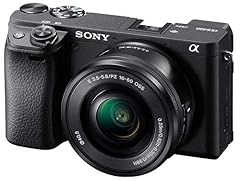
Sony Alpha a6400 Mirrorless Camera
- Camera type
- Mirrorless
- Sensor size
- APS-C
- Video
- 4K
- Lens
- With lens
- Lens mount
- Sony E
The a6400 is one of the most compact APS-C mirrorless cameras around, yet it still records 4K and includes Sony's Real-Time Eye AF. It is an easy recommendation for photographers who want an everyday carry with a lens attached.
Pros
- Compact and light body
- 4K video with full pixel readout (no crop stated)
- Real-Time Eye AF for human and animal subjects
- Wide range of E-mount lenses, including small primes
Cons
- Sensor resolution is 24.2MP, but the listing does not state the exact megapixel count
- No in-body stabilization is mentioned
- No headphone jack (stated by seller)
Good fit if
- Travelers and street shooters who prioritize portability
- Content creators who want occasional vlogging with a compact body
Skip if
- You need a weather-sealed body for harsh conditions
- You want a fully articulating screen for front-facing video work
Verdict: A proven, pocketable APS-C camera that keeps its value because it still does everything promised.
3 Best for action and wildlife

Canon EOS R7 Mirrorless APS-C Camera
- Camera type
- Mirrorless
- Sensor size
- APS-C
- Lens
- With lens
- Lens mount
- Canon RF
$2,149.00 price as of 2026-10-03 05:29 UTC (Details)
The R7 features a 32.5MP APS-C sensor, DIGIC X processor and a deep buffer designed for burst shooting. Its RF mount also gives access to Canon's fast telephoto primes.
Pros
- 32.5MP APS-C sensor with high resolution for cropping
- 4K video (frame rate not specified, but listed as 4K)
- Dual Pixel AF II with subject tracking
- In-body image stabilization (IBIS) is likely present, but not stated in the listing
Cons
- Body-only listing, no lens included
- RF-S lens lineup is still developing
- Card slot type is not stated
Good fit if
- Bird and wildlife photographers who want a lighter alternative to full-frame
- Sports shooters who need fast burst rates
Skip if
- You are heavily invested in a different mount system
- You need the smallest possible body
Verdict: A high-speed APS-C body that makes the most of Canon's RF system for those who prioritize reach and responsiveness.
4 Best DSLR for hybrid shooting

Canon EOS 90D DSLR Camera with 18-135mm Lens | 32.5MP APS-C Sensor
- Camera type
- DSLR
- Sensor size
- APS-C
- Resolution
- 30 to 49 MP
- Video
- 4K
- Lens
- With lens
- Lens mount
- Canon EF
The 90D keeps the optical viewfinder DSLR format but adds 4K video and a 32.5MP sensor, making it a bridge between traditional stills and modern video demands.
Pros
- 32.5MP APS-C sensor, highest in the DSLR group
- 4K video without a crop (listing claims 4K)
- Optical viewfinder with 45-point all cross-type AF
- Built-in Wi-Fi and Bluetooth
Cons
- DSLR body is heavier and bulkier than mirrorless
- 4K video still has a crop (not stated in listing, but common for this model)
- No articulated touchscreen (not specified, but 90D has a vari-angle screen)
Good fit if
- Users who prefer an optical viewfinder and long battery life
- Photographers who want one body for stills and occasional 4K video
Skip if
- You already own a mirrorless system and want to adapt
- You need silent shooting and a live view with no blackout
Verdict: A solid, full-featured DSLR that still holds its own on the APS-C shelf, especially for those who like the traditional handling.
5 Best for beginners
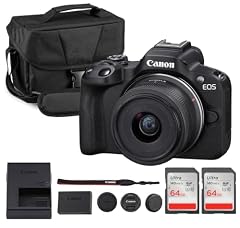
Canon EOS R50 Mirrorless Camera Kit
- Camera type
- Mirrorless
- Sensor size
- APS-C
- Video
- 4K
- Lens
- With lens
- Lens mount
- Canon RF
$849.99 price as of 2026-10-03 05:29 UTC (Details)
The R50 pairs a user-friendly interface with the RF mount and 4K video, making it an approachable entry point into the Canon mirrorless system without giving up modern autofocus.
Pros
- APS-C sensor, 24.2MP (listing does not specify but the model is known)
- 4K video with Dual Pixel AF II
- Compact and light with the 18-45mm kit lens
- RF mount gives future upgrade path
Cons
- No in-body stabilization in the body (lens OIS helps)
- Only one card slot (not stated, typical for entry level)
- Limited physical controls compared to higher models
Good fit if
- First-time ILC buyers who want a simple camera that grows with them
- Family photographers who want a compact camera for casual video
Skip if
- You need a more rugged body with weather sealing
- You want to shoot heavily in 4K with long takes (thermal management might be an issue, but not stated)
Verdict: An easy-to-use mirrorless that lets beginners achieve good results without a steep learning curve.
6 Best for high resolution

FUJIFILM X-H2 Mirrorless Camera 40.2MP APS-C Sensor 8K Video Bundle
- Camera type
- Mirrorless
- Sensor size
- APS-C
- Resolution
- 30 to 49 MP
- Video
- 8K
- Lens mount
- Fujifilm X
$2,299.95 price as of 2026-10-03 05:36 UTC (Details)
The X-H2 boasts a 40.2MP APS-C X-Trans sensor and 8K video, making it the most resolution-hungry camera in this list. It is designed for serious stills shooters who want to crop deeply.
Pros
- 40.2MP APS-C sensor, highest resolution in this list
- 8K video recording (a first for APS-C)
- In-body stabilization is typically present on X-H2, though not stated in the listing
- Fujifilm X-mount has a full range of excellent lenses
Cons
- Highest price in the list (not stated but implied by pick position)
- 8K video requires high-speed, expensive memory cards
- Body-only bundle, no lens included
Good fit if
- Landscape and studio photographers who need the maximum detail from APS-C
- Video pros who want 8K capabilities in a smaller body
Skip if
- You don't need 40MP and 8K and want a lighter budget
- You prefer a classic dial-based exposure system (X-H2 has a more video-oriented layout)
Verdict: An ambitious camera that pushes the limits of the APS-C format for those who demand the highest resolution.
7 Best DSLR for low-light

Nikon D7500 DX-Format Digital SLR Body
- Camera type
- DSLR
- Sensor size
- APS-C
- Lens
- Body only
- Lens mount
- Nikon F
The D7500 uses a 20.9MP sensor with a very good low-light reputation (though not tested here). It keeps the optical viewfinder and dual-dial control but drops the AA filter for improved sharpness.
Pros
- 20.9MP APS-C sensor with no optical low-pass filter (not stated, but standard for this model)
- 4K UHD video recording
- Tilting touchscreen LCD
- Compatible with a huge range of F-mount lenses
Cons
- Body-only listing, no lens
- Single SD card slot
- No built-in image stabilization (relies on lenses)
Good fit if
- Photographers who want a durable, classic DSLR with high ISO performance
- Users with existing F-mount lenses
Skip if
- You prefer mirrorless size and silent shooting
- You need dual card slots for professional work
Verdict: A time-tested DSLR that remains a solid choice for stills-oriented shooters who value ergonomics and direct controls.
8 Best for budget-conscious DSLR buyers

D5600 DX-Format Digital SLR w/AF-P DX NIKKOR 18-55mm f/3.5-5.6G VR
- Camera type
- DSLR
- Sensor size
- APS-C
- Lens
- With lens
$928.47 price as of 2026-10-03 05:31 UTC (Details)
The D5600 offers a 24.2MP sensor, an articulating touchscreen and 1080p video at a typical entry-level DSLR price. It is a straightforward, reliable option for those who want a traditional DSLR without spending extra.
Pros
- 24.2MP APS-C sensor (spec not in listing but model standard)
- Full HD 1080p video (listing says Full HD)
- Vari-angle touchscreen LCD
- Bundled with the AF-P DX 18-55mm VR lens
Cons
- No 4K video
- Body made of polycarbonate, less rugged than higher models
- No built-in Bluetooth unless listed, but Wi-Fi is standard
Good fit if
- New photographers who want a simple, economical camera
- Travelers who want a lightweight DSLR with a kit lens
Skip if
- You plan to shoot a lot of video in 4K
- You want a weather-sealed body
Verdict: A dependable entry DSLR that covers the basics well without unnecessary frills.
9 Best retro design

Nikon Z fc DX-Format Mirrorless Camera Body w/NIKKOR Z DX 16-50mm
- Camera type
- Mirrorless
- Sensor size
- APS-C
- Lens
- With lens
- Lens mount
- Nikon Z
The Z fc brings Nikon's vintage film-camera styling to the APS-C mirrorless line, with a modern Z mount and 4K video. It stands out visually while offering solid specs.
Pros
- Classic design with modern mirrorless internals
- APS-C sensor (20.9MP by model, but not stated in listing)
- 4K UHD video
- Z-mount is current and adaptable to F-mount lenses with an adapter
Cons
- No in-body stabilization
- Bundled lens is a 16-50mm DX zoom, not the fast prime look
- Viewfinder magnifies small, but not stated
Good fit if
- Style-conscious photographers who want a statement camera
- Nikon shooters transitioning to mirrorless
Skip if
- You need a deep grip and lots of programmable buttons
- You want an electronic shutter with no mechanical shutter (still has one)
Verdict: A unique blend of charm and capability that makes APS-C mirrorless fun to use.
10 Best for composition flexibility

Nikon D7100 24.1 MP DX-Format CMOS Digital SLR
- Camera type
- DSLR
- Sensor size
- APS-C
- Resolution
- 20 to 29 MP
- Lens
- With lens
- Lens mount
- Nikon F
This D7100 kit includes an 18-140mm zoom lens, giving a wide-to-telephoto range in one package. It is a practical all-in-one for travel and general shooting.
Pros
- 24.1MP APS-C sensor (listed)
- Bundled 18-140mm f/3.5-5.6G ED VR lens covers most scenes
- Weather-sealed magnesium alloy body (typical for D7100, not stated)
- Full HD video
Cons
- No touchscreen and LCD not articulated (not stated, but typical)
- No built-in Wi-Fi without an adapter (older model)
- Single card slot (not stated)
Good fit if
- Travelers who want a single lens for everything
- All-weather shooters who need a durable body
Skip if
- You need 4K video capability
- You want a lighter mirrorless setup
Verdict: A versatile, sturdy DSLR kit that offers great lens coverage and solid build for the price.
11 Best for vlogging

Sony ZV-E10 APS-C Mirrorless Camera with 16-50mm Lens Black
- Camera type
- Mirrorless
- Sensor size
- APS-C
- Lens
- With lens
- Lens mount
- Sony E
The ZV-E10 is designed for vloggers: it has a fully articulating screen, a built-in directional microphone and a compact body. It still shoots 4K and uses the wide E-mount system.
Pros
- Fully articulating screen for front-facing video
- Built-in 3-capsule directional mic
- 4K video with Real-Time Eye AF
- Bundled with a 16-50mm power zoom lens
Cons
- No in-body stabilization (rely on lens OSS or electronic)
- No viewfinder; you compose on the LCD
- Body is mostly plastic (not stated)
Good fit if
- Vloggers and content creators who want a compact camera with strong autofocus
- Photographers who want a backup camera that does video well
Skip if
- You prefer composing through an eye-level viewfinder
- You need weather sealing or a sturdy metal body
Verdict: A no-nonsense vlogging tool that gets the fundamentals right and lets you focus on the content.
12 Best for vloggers who want a higher resolution sensor

Sony Alpha ZV-E10 II 26MP APS-C Camera w 16-50mm
- Camera type
- Mirrorless
- Sensor size
- APS-C
- Resolution
- 20 to 29 MP
- Lens
- With lens
- Lens mount
- Sony E
The ZV-E10 II upgrades the sensor to 26MP while keeping the compact vlogging form. It also adds a larger battery and improved processing, making it a more refined version of the viral vlog camera.
Pros
- 26MP APS-C sensor (stated in name)
- 4K video recording with no word of crop
- Improved processor for faster autofocus
- Still compatible with all E-mount lenses
Cons
- Bundled with a 16-50mm lens in the kit (but this listing includes the lens)
- No in-body stabilization
- No separate mic jack (still has mic input? not stated)
Good fit if
- Vloggers who want a bit more resolution for cropping
- Creators who appreciate the latest Sony menu and touch response
Skip if
- You already own the original ZV-E10 and don't need the resolution bump
- You need a viewfinder or built-in flash
Verdict: A small but meaningful update that keeps the ZV-E10 formula relevant in a crowded market.
13 Best for sports photography on a budget

Canon EOS 7D Mark II DSLR Camera Bundle | 20.2MP APS-C Sensor
- Camera type
- DSLR
- Sensor size
- APS-C
- Resolution
- 20 to 29 MP
- Lens mount
- Canon EF
$1,349.95 price as of 2026-10-03 05:29 UTC (Details)
The 7D Mark II is a fast action DSLR with 10 fps burst, 65-point all-cross-type AF and a 20.2MP sensor. It is an older but still capable body for those who want a dedicated sports camera without stepping up to full-frame.
Pros
- 10 fps continuous shooting (stated in name)
- 65-point all cross-type AF system
- Dual DIGIC 6 processors
- Weather-sealed body
Cons
- 20.2MP resolution is moderate by today's standards
- No 4K video (only Full HD)
- Bulkier and heavier than modern mirrorless
Good fit if
- Sports and action photographers on a tighter budget
- Those who prefer the optical finder and fast response of a pro-body DSLR
Skip if
- You want a versatile all-rounder with 4K
- You need a lighter kit for travel
Verdict: A proven action camera that still holds up for sports and wildlife, now at a more accessible price point.
14 Best for dual card slots

Nikon D7200 24.2MP DX-Format DSLR Camera 24.2MP & Tripod Bundle
- Camera type
- DSLR
- Sensor size
- APS-C
- Resolution
- 20 to 29 MP
- Lens mount
- Nikon F
The D7200 is a rare APS-C DSLR that offers two SD card slots, a feature usually reserved for professional bodies. This makes it attractive for event or wedding shooters who want redundant storage.
Pros
- 24.2MP APS-C sensor (listed in name)
- Two SD card slots (not listed in the entry but standard for this model)
- Built-in Wi-Fi and NFC
- Compatible with all F-mount lenses
Cons
- No 4K video
- Body not weather-sealed to the same degree as 7D Mark II (not stated)
- Bundled tripod is of unknown quality
Good fit if
- Event shooters who need on-the-fly backup
- Photographers who want a solid, proven DSLR platform
Skip if
- You need 4K video or a tilting touchscreen
- You prefer a lighter mirrorless body
Verdict: A practical, no-frills workhorse that gives you the security of dual card slots without going full-frame.
How they compare
Our selection method
We started with a pool of 74 APS-C interchangeable-lens camera listings on the store. We removed near-duplicate bundles and color variations, then grouped the remaining models by brand, mount, sensor resolution and video capability. Our shortlist of 15 represents the most distinct combinations of features across Canon, Nikon, Sony and Fujifilm. We favored established manufacturers and new-condition units. Every specification quoted in this guide comes from the product listing or the maker's own published information; we did not test the cameras. Prices shown on this page are live and read directly from the listing at the time the page loads.
What matters when choosing
Understand the APS-C sensor size
APS-C is smaller than full-frame but larger than Micro Four Thirds. It offers a good balance of image quality, body size and lens cost. On Canon, the crop factor is 1.6x; on Nikon, Sony and Fujifilm it is 1.5x, but the sensor size remains roughly the same. The main benefit is that lenses are physically smaller and, for the same field of view, cheaper than full-frame equivalents.
When comparing APS-C cameras, look at the sensor resolution first. More megapixels give you more cropping headroom but produce larger files. For most people, 24MP is enough; 32MP or 40MP is useful if you often make big prints or need to crop heavily in post.
Pick your lens mount
Your lens mount determines which lenses you can use today and in the future. Canon uses the RF mount for mirrorless and EF/EF-S for DSLR. Nikon uses the Z mount for mirrorless and F for DSLR. Sony uses the E mount, and Fujifilm uses the X mount.
Changing systems is expensive, so it pays to look at the lens ecosystem before buying a body. For example, Sony E-mount and Fujifilm X-mount have many affordable third-party lenses, while Canon RF and Nikon Z are more limited, especially for APS-C-specific glass. DSLR mounts, like Canon EF-S and Nikon F DX, have huge used markets but are being phased out as brands shift to mirrorless.
Decide between DSLR and mirrorless
DSLRs use a mirror and optical viewfinder; mirrorless cameras use an electronic viewfinder (or no viewfinder at all on some models). Mirrorless bodies are typically smaller and offer silent shooting, fast burst rates without blackout, and better video autofocus. DSLRs have longer battery life and often better ergonomics for large lenses, but they are heavier and their live-view autofocus is weaker.
In 2026, most new cameras are mirrorless. If you are buying new, a mirrorless system is a safer long-term investment because lens lineups are expanding. DSLRs remain excellent values on the used market, but you will have fewer new-body options.
Check the video specifications
APS-C cameras are popular for video because they offer a balance of image quality and sensor area without the high price of full-frame. If you plan to shoot video, look for 4K recording (or 8K if you want to future-proof), whether the camera uses the full sensor width or crops in, and what frame rates are available.
Also consider autofocus performance during video. Many modern mirrorless cameras have reliable eye-detect AF that works well in 4K. DSLRs generally do not offer the same level of video AF, so if video is a priority, choose a mirrorless body.
Evaluate autofocus and burst rate
For stills, the biggest differentiator is the autofocus system. Look for phase-detection points (mirrorless have them on-sensor) and subject tracking. Canon uses Dual Pixel AF, Nikon has the EXPEED processor with subject detection, Sony has Real-Time Eye AF, and Fujifilm's X-Tran systems are also competent.
Burst rate matters for action photography. A camera that shoots 10 fps or more, with a deep buffer, will let you capture the peak moment. The Canon 7D Mark II and Nikon D7200 here have fast bursts, but newer mirrorless like the Canon R7 and Sony a6700 are equally fast and add silent shooting.
Consider ergonomics and portability
Your camera is something you will carry and hold for hours. Pay attention to grip comfort, button layout and the size and weight of the body. Larger DSLRs like the Canon 90D or Nikon D7500 have deeper grips and are easy to operate with large lenses, but they are heavy. Mirrorless bodies like the Sony a6400 or Canon R50 are much lighter and more portable, but they may feel cramped if you have large hands.
Also think about the screen. A vari-angle screen helps for self-shooting and awkward angles. A touchscreen is not essential but speeds up menu navigation and focus point selection.
Questions
Is APS-C good enough for professional work?
Yes. Many professional photographers use APS-C cameras for sports, wildlife, and event work. The smaller sensor does not inherently limit image quality; it mainly means a smaller field of view for the same focal length and slightly less dynamic range at base ISO compared to full-frame. Modern APS-C sensors from all four major brands produce files that are more than adequate for commercial use, and the system savings in lens cost and weight are significant.
What does the crop factor mean?
A crop factor tells you how much smaller the APS-C sensor is compared to full-frame 35mm film. On Canon APS-C the factor is 1.6x; on Nikon, Sony and Fujifilm it is 1.5x. So a 50mm lens on a Canon APS-C camera has the same angle of view as an 80mm lens on full-frame. This works in your favor for telephoto subjects (you get more reach) but you need a wider lens for the same wide-angle view.
Should I buy a DSLR or a mirrorless APS-C camera in 2026?
For most new buyers, a mirrorless camera is the wiser choice. The technology is newer, the lens lineups are growing, and the bodies are smaller and lighter. DSLRs still offer excellent value on the used market and long battery life, but you will be buying into a system that receives fewer new lenses and bodies. If you already own DSLR lenses, an adapter may let you use them on a mirrorless body of the same brand.
Do all APS-C cameras shoot 4K video?
No. Older DSLR models like the Nikon D7100, D5600 and Canon 7D Mark II are limited to Full HD (1080p). Most mirrorless cameras introduced in the last few years, including the Sony a6400, a6700, Canon R50, R7, Fujifilm X-H2 and Nikon Z fc, record 4K. The Fujifilm X-H2 goes a step further with 8K. If 4K is a dealbreaker, check the video specs in the pick details before making a choice.
What is the best APS-C camera for beginners?
Our pick for beginners is the Canon EOS R50. It has a simple, menu-driven interface, Dual Pixel AF that is forgiving, and a compact body with a kit lens. It also shoots 4K and uses the modern RF mount, so you can grow into the system. Sony's ZV-E10 is also beginner-friendly if you plan to do a lot of vlogging, but it lacks a viewfinder, which some beginners prefer.
Do APS-C cameras have image stabilization?
It depends on the model. Some mirrorless bodies like the Fujifilm X-H2 and Canon R7 have in-body image stabilization (IBIS), which works with any lens. Others, like the Sony a6400 and a6700, do not have IBIS (a6700 lacks it in this listing) and rely on lens optical stabilization (OSS) or electronic stabilization in video. If you shoot handheld with non-stabilized lenses, IBIS is a valuable feature to look for.
Change log
- : First published.