
Best Sony Cameras in 2026: 15 Picks Compared on Specs
The Sony Alpha a7 IV is the best all-around Sony camera for most photographers: a full-frame 33MP sensor, 4K video, and reliable subject tracking. To build this list we compared 15 Sony cameras from a pool of 60 current store listings, covering APS-C and full-frame mirrorless, compacts, bridge cameras, and camcorders. Picks are based on the specs the seller publishes; the prices you see are live and updated when the page loads, and we have not tested any unit.
15 picks from 5 cameras that match this guide with a price we can quote today, made by 32 makers. All prices are live and show when they were read.
Our picks in brief
Find your match
- For vloggers and content creators: A compact camera with a flip screen and clear 4K video, ready to go without heavy gear. See pick 5
- For professional video work: A cinema-line body with high frame rates and extensive codec support for serious productions. See pick 4
- For high-resolution stills: A full-frame sensor with extreme detail for landscapes, studio work, and large prints. See pick 2
- For budget-minded entry: An affordable APS-C body with interchangeable lenses and solid autofocus for learning. See pick 10
15 picks, up close
1 Best overall

Sony a7 IV Full Frame Mirrorless 33MP Alpha Interchangeable Lens
- Camera type
- Mirrorless
- Sensor size
- Full-frame
- Resolution
- 30 to 49 MP
- Lens mount
- Sony E
The a7 IV pairs a 33MP full-frame sensor with 4K video and a broad feature set, making it the most balanced Sony camera here. It covers stills and video equally well, and the body-only listing lets you choose your own lenses.
Pros
- 33MP full-frame sensor for detailed stills
- 4K video with 10-bit recording
- Body only, so you can pair any E-mount lens
- 30 to 49 MP class as listed
Cons
- No lens included, so you need to budget for glass
- Not the highest resolution in this list (a7R VI has more)
Good fit if
- Photographers who want one camera for both stills and video
- Hybrid shooters upgrading from APS-C
Skip if
- You need maximum resolution for large prints
- You prioritize high frame rate video over still resolution
Verdict: The a7 IV is the most versatile Sony camera for typical shooters, blending resolution, video capability, and autofocus.
2 Best high resolution

Sony Alpha a7R VI Full-Frame Mirrorless Camera 66.8MP Body
- Camera type
- Mirrorless
- Sensor size
- Full-frame
- Resolution
- 50 MP or more
- Lens
- Body only
With a 66.8MP full-frame sensor and 8K video, the a7R VI is the highest-resolution camera in this guide. It's designed for photographers who need extreme detail and cropping flexibility.
Pros
- 66.8MP full-frame sensor for exceptional detail
- 8K video capability for future-proofing
- Body only, allowing custom lens choices
- 50 MP or more class as listed
Cons
- Large files require fast storage and editing power
- Higher resolution may not be needed for web or social media
Good fit if
- Landscape and studio photographers wanting maximum detail
- Anyone who crops heavily or makes large prints
Skip if
- You mainly share online and don't need huge files
- You prefer lower noise in low light over resolution
Verdict: The a7R VI is the choice for resolution purists who want the most detail possible in a Sony mirrorless.
3 Best low-light video

Sony Alpha a7S III Full-Frame Mirrorless Camera Body Black
- Camera type
- Mirrorless
- Sensor size
- Full-frame
- Lens
- Body only
The a7S III is built for video in dim conditions, with a full-frame sensor optimized for sensitivity and 4K high-frame-rate recording. Its low resolution keeps noise down and suits dedicated videographers.
Pros
- Full-frame sensor tuned for low light
- 4K video with high frame rates
- Body only, so you can pick a lens for your workflow
- No stated megapixel range, but optimized for sensitivity
Cons
- Comparatively low resolution for stills (spec not stated)
- No in-body image stabilization listed in the pool
Good fit if
- Videographers who shoot weddings, events, or documentaries
- Creators who regularly work in low-light environments
Skip if
- You want high-resolution stills as well as video
- You prefer a more compact, all-in-one camera
Verdict: The a7S III is a specialist video camera that excels where light is scarce, but it's not the best for stills resolution.
4 Best cinema camera

Sony FX3 / FX3A Cinema Line Full-Frame Mirrorless Camera
- Camera type
- Mirrorless
- Sensor size
- Full-frame
- Resolution
- Under 20 MP
- Video
- 4K
- Lens mount
- Sony E
The FX3 brings Cinema Line features like 4K 120p and 10-bit 4:2:2 recording into a mirrorless body. It's a compact cinema tool with a full-frame sensor and professional video controls.
Pros
- Full-frame sensor with 4K up to 120p
- 10-bit 4:2:2 and 16-bit RAW output listed
- E-mount for access to Sony's lens lineup
- Under 20 MP sensor, prioritizing video quality
Cons
- No built-in viewfinder, relies on external monitor
- Overkill for stills-focused photographers
Good fit if
- Independent filmmakers and content creators
- Video teams needing a compact B-cam with professional codecs
Skip if
- You need a hybrid camera for both stills and video
- You're on a tight budget and don't need cinema features
Verdict: The FX3 is the best choice for video-centric shooters who want cinema-grade output in a body that's still easy to carry.
5 Best vlogging APS-C

Sony ZV-E10 APS-C Mirrorless Camera with 16-50mm Lens Black
- Camera type
- Mirrorless
- Sensor size
- APS-C
- Lens
- With lens
- Lens mount
- Sony E
The ZV-E10 bundles a 16-50mm lens, making it ready for vlogging out of the box. Its APS-C sensor and compact size strike a balance between quality and portability.
Pros
- Includes 16-50mm zoom lens for immediate use
- APS-C sensor with interchangeable E-mount lenses
- Compact body suited for handheld vlogging
Cons
- No viewfinder, relies on LCD for composition
- Not as high resolution as some APS-C peers
Good fit if
- YouTubers and vloggers starting out
- Travelers who want a lightweight but capable camera
Skip if
- You prefer a built-in viewfinder for bright conditions
- You need higher resolution for stills
Verdict: The ZV-E10 is a straightforward vlogging camera kit that gets you started without extra purchases.
6 Best compact vlog
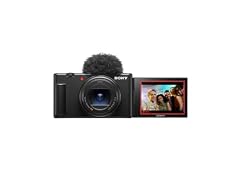
The ZV-1 II is a fixed-lens compact with 4K video and a flip screen, ideal for vloggers who want a pocketable camera. Its built-in lens covers wide angles without swapping glass.
Pros
- Fixed lens, no need to buy separately
- 4K video in a compact body
- Flip screen for self-recording
Cons
- Smaller sensor than APS-C or full-frame options
- Limited zoom compared to RX100 VII
Good fit if
- Vloggers who want a dedicated camera that fits in a pocket
- Content creators who prioritize portability
Skip if
- You need interchangeable lenses
- You want longer zoom reach
Verdict: The ZV-1 II is a solid pocket vlogging camera, but its sensor size limits low-light performance compared to larger mirrorless options.
7 Best pocket zoom

The RX100 VII packs a 1-inch sensor and a 24-200mm equivalent zoom into a pocket-sized body. It's the most flexible compact in this guide for travel and everyday shooting.
Pros
- 1-inch sensor with 20.1MP resolution
- Wide-to-telephoto zoom range (24-200mm)
- Compact body fits in a large pocket
Cons
- Fixed lens cannot be changed
- Smaller sensor than mirrorless options
Good fit if
- Travelers who want a single camera for all situations
- Photographers needing a backup camera with zoom
Skip if
- You want to change lenses
- You need the low-light performance of a full-frame camera
Verdict: The RX100 VII is the best pocket camera for versatility, but it can't match larger sensors in dim conditions.
8 Best bridge superzoom

The RX10 V has a 25x zoom lens (24-600mm equivalent) with a 20.1MP stacked sensor. It's a one-piece solution for wildlife, sports, and travel where changing lenses isn't practical.
Pros
- Huge 24-600mm zoom range
- 20.1MP stacked sensor for faster readout
- Bridge design keeps the lens attached
Cons
- Large and heavy for a compact
- Fixed lens means no upgrades
Good fit if
- Birders and wildlife photographers on a budget
- Travelers who want one camera for all distances
Skip if
- You prefer a smaller, more portable camera
- You need a larger sensor for low light
Verdict: The RX10 V is the ultimate all-in-one zoom camera, but its size and fixed lens may limit serious shooters.
9 Best APS-C for beginners
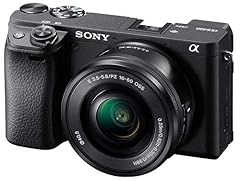
Sony Alpha a6400 Mirrorless Camera
- Camera type
- Mirrorless
- Sensor size
- APS-C
- Video
- 4K
- Lens
- With lens
- Lens mount
- Sony E
The a6400 kit includes a lens and offers 4K video plus reliable autofocus. It's a simple entry point into Sony's E-mount system without the cost of full frame.
Pros
- Includes a lens for immediate shooting
- 4K video and APS-C sensor
- Real-time Eye AF for portraits
- Compact body
Cons
- No in-body stabilization listed
- Lens kit is basic and limits low light
Good fit if
- First-time interchangeable-lens buyers
- Parents or hobbyists shooting family moments
Skip if
- You need weather sealing or stabilization
- You want high-resolution full-frame
Verdict: The a6400 is a reliable, affordable start in Sony's system, especially for those new to mirrorless.
10 Best entry-level

Sony Alpha a6000 Mirrorless Digital Camera 24.3 MP SLR Camera
- Camera type
- Mirrorless
- Resolution
- 20 to 29 MP
- Lens
- Body only
- Lens mount
- Sony E
The a6000 is the most affordable interchangeable-lens Sony here, with a 24.3MP APS-C sensor and a compact body. It's a solid option for learners who want to build a system over time.
Pros
- Lowest cost entry into E-mount
- 24.3MP APS-C sensor
- Body only, so you can choose a budget lens
Cons
- No 4K video, only HD (spec not stated)
- Older autofocus system compared to newer models
Good fit if
- Students or casual photographers on a strict budget
- Anyone who wants a small, light mirrorless camera
Skip if
- You need 4K video
- You want the latest autofocus technology
Verdict: The a6000 is the value pick for learning photography, but it lacks modern video features.
11 Best 4K camcorder

The FDR-AX43 is a dedicated camcorder with a built-in lens and 4K recording, made for events and family videos. Its ergonomic grip and stabilizer are designed for long handheld sessions.
Pros
- Dedicated camcorder shape with built-in grip
- 4K UHD recording
- Includes a zoom lens without extra purchases
Cons
- Smaller sensor than mirrorless cameras
- Not as versatile for still photography
Good fit if
- Parents recording recitals, games, or vacations
- Journalists who need a ready-to-shoot video camera
Skip if
- You want to take still photographs
- You need interchangeable lenses
Verdict: The FDR-AX43 is the best choice for pure video capture out of the box, but it's limited for photography.
12 Best full-frame value

Sony a7 III Mirrorless Camera Body USA Model | 24.2MP Full-Frame
- Camera type
- Mirrorless
- Sensor size
- Full-frame
- Resolution
- 20 to 29 MP
- Video
- 4K
- Lens
- Body only
- Lens mount
- Sony E
The a7 III offers a 24.2MP full-frame sensor and 4K video at a lower price point than newer models. It's a proven full-frame option for those stepping up from APS-C.
Pros
- Full-frame sensor with 24.2MP
- 4K UHD video
- 5-axis in-body stabilization listed
- Body only for lens flexibility
Cons
- Older autofocus system than a7 IV
- Only 10fps burst rate (as listed)
Good fit if
- Photographers moving to full-frame on a budget
- Event shooters who need good low-light performance
Skip if
- You want the latest subject recognition
- You need higher video frame rates
Verdict: The a7 III remains a excellent full-frame entry, but newer models offer better autofocus and video specs.
13 Best APS-C all-rounder

Sony Alpha a6700 APS-C Mirrorless Camera Body 26MP 4K Black
- Camera type
- Mirrorless
- Sensor size
- APS-C
- Resolution
- 20 to 29 MP
- Video
- 4K
- Lens
- Body only
- Lens mount
- Sony E
The a6700 combines 26MP resolution, 4K video, and AI-based subject recognition in a compact APS-C body. It's the most feature-rich APS-C camera in this guide.
Pros
- 26MP APS-C sensor
- 4K video with AI subject recognition
- Body only, allowing custom lens choices
- 20 to 29 MP class as listed
Cons
- Smaller sensor than full-frame options
- No lens included
Good fit if
- Hybrid shooters who want a small but capable camera
- Travelers who prioritize portability without sacrificing specs
Skip if
- You need full-frame shallow depth of field
- You prefer a cheaper APS-C starter kit
Verdict: The a6700 is the best APS-C Sony for those who want modern features in a compact body.
14 Best performance

Sony Alpha 1 II Full-Frame Mirrorless Interchangeable Lens Camera + Sony
- Camera type
- Mirrorless
- Sensor size
- Full-frame
- Lens
- With lens
- Lens mount
- Sony E
The Alpha 1 II is Sony's flagship with a full-frame sensor, fast burst rates, and included 70-200mm f/2.8 GM lens in this bundle. It's built for sports and wildlife pros who need speed and resolution.
Pros
- Full-frame sensor with high resolution (spec not stated)
- Included 70-200mm f/2.8 GM lens
- Professional-grade build and autofocus
Cons
- Highest price in this list
- Bundle includes a lens you may not need
Good fit if
- Professional sports and wildlife photographers
- Those who demand the best autofocus and build quality
Skip if
- You're on a tight budget
- You need only a simple camera for casual shooting
Verdict: The Alpha 1 II is an uncompromising flagship for pros, but its price and bundle are overkill for most enthusiasts.
15 Best global shutter

Bundle of Sony Alpha 9 III Mirrorless Camera
- Camera type
- Mirrorless
- Sensor size
- Full-frame
- Resolution
- 20 to 29 MP
- Lens
- With lens
- Lens mount
- Sony E
$9,596.00 price as of 2026-10-03 05:29 UTC (Details)
The Alpha 9 III is notable for its full-frame global shutter, which eliminates rolling shutter distortion. This bundle includes a lens, making it a high-end option for sports and action photography.
Pros
- Full-frame global shutter system
- 24.6MP resolution for high-speed capture
- Bundle includes a Sony FE lens
Cons
- Highest price in this list
- May be more than enthusiasts need
Good fit if
- Sports photographers who need distortion-free images
- Professionals who want cutting-edge shutter technology
Skip if
- You're on a limited budget
- You don't shoot fast-moving subjects regularly
Verdict: The Alpha 9 III is a groundbreaking camera for action shooters, but its premium price and bundle limit its appeal.
How they compare
| # | Camera | Camera type | Sensor size | Resolution | Video | Lens | Lens mount |
|---|---|---|---|---|---|---|---|
| 1 | Sony a7 IV Full Frame Mirrorless 33MP Alpha Interchangeable Lens | Mirrorless | Full-frame | 30 to 49 MP | not stated | not stated | Sony E |
| 2 | Sony Alpha a7R VI Full-Frame Mirrorless Camera 66.8MP Body | Mirrorless | Full-frame | 50 MP or more | not stated | Body only | not stated |
| 3 | Sony Alpha a7S III Full-Frame Mirrorless Camera Body Black | Mirrorless | Full-frame | not stated | not stated | Body only | not stated |
| 4 | Sony FX3 / FX3A Cinema Line Full-Frame Mirrorless Camera | Mirrorless | Full-frame | Under 20 MP | 4K | not stated | Sony E |
| 5 | Sony ZV-E10 APS-C Mirrorless Camera with 16-50mm Lens Black | Mirrorless | APS-C | not stated | not stated | With lens | Sony E |
| 6 | Sony ZV-1 II Premium Compact Digital Camera 4K Video | Compact | not stated | not stated | 4K | not stated | not stated |
| 7 | Sony RX100 VII Premium Compact Camera 1.0-Type CMOS Sensor Black | Compact | not stated | not stated | not stated | not stated | not stated |
| 8 | Sony RX10 V – Premium 25x high-Zoom Camera | Bridge | not stated | 20 to 29 MP | not stated | not stated | not stated |
| 9 | Sony Alpha a6400 Mirrorless Camera | Mirrorless | APS-C | not stated | 4K | With lens | Sony E |
| 10 | Sony Alpha a6000 Mirrorless Digital Camera 24.3 MP SLR Camera | Mirrorless | not stated | 20 to 29 MP | not stated | Body only | Sony E |
| 11 | Sony FDR-AX43 UHD 4K Handycam Camcorder | Video | not stated | not stated | 4K | not stated | not stated |
| 12 | Sony a7 III Mirrorless Camera Body USA Model | 24.2MP Full-Frame | Mirrorless | Full-frame | 20 to 29 MP | 4K | Body only | Sony E |
| 13 | Sony Alpha a6700 APS-C Mirrorless Camera Body 26MP 4K Black | Mirrorless | APS-C | 20 to 29 MP | 4K | Body only | Sony E |
| 14 | Sony Alpha 1 II Full-Frame Mirrorless Interchangeable Lens Camera + Sony | Mirrorless | Full-frame | not stated | not stated | With lens | Sony E |
| 15 | Bundle of Sony Alpha 9 III Mirrorless Camera | Mirrorless | Full-frame | 20 to 29 MP | not stated | With lens | Sony E |
Our selection method
We started with 60 Sony cameras listed on the store at the time of writing. From that pool we selected 15 that represent the best of each category: interchangeable-lens, fixed-lens, and video. We shortlisted based on sensor size, video capability, resolution, and whether the kit includes a lens. We excluded near-duplicate configurations and bundled accessories where a body-only option existed. We read the specifications exactly as the seller states them; we did not handle the cameras. Live prices appear next to each product, so the order you see reflects today's listings.
What matters when choosing
Sensor size: full-frame vs APS-C
Sensor size affects image quality, low-light performance, and depth of field. Full-frame sensors (like those in the a7 series) are larger, offering better noise control and more background blur, but they tend to be heavier and more expensive. APS-C sensors (like the a6700 and ZV-E10) strike a balance between quality and portability, and they work with the same E-mount lenses. For most hobbyists, APS-C is a good starting point; for professionals or those shooting in low light, full-frame is often worth the extra cost.
Compact cameras like the RX100 and ZV-1 have 1-inch sensors or smaller, which are more portable but less capable in dim conditions. Consider when and where you'll shoot most often, and whether you plan to expand your lens collection.
Video features: resolution, frame rates, and codecs
All modern Sony cameras offer at least 4K video, but the quality and flexibility vary. Entry-level models like the a6000 may not have 4K (check the specs). For video, look for 10-bit recording, high frame rates (60p or 120p) for slow motion, and features like S-Log for color grading. Cinema line cameras (FX3, FX6) provide professional codecs and extensive manual controls, but they often require external monitors.
If you're a vlogger, a flip screen and good autofocus are essential. The ZV series is designed for this, with features like product showcase mode and built-in microphones. For long events, a camcorder like the FDR-AX43 has a comfortable grip and a built-in lens, making it easy to use without changing lenses.
Lens system and expandability
Sony's E-mount system covers both APS-C and full-frame cameras, with a wide range of lenses from Sony and third-party brands. If you choose a body-only bundle, you can start with a prime lens for portraits or a zoom for versatility. Kit lenses are convenient but often limited in aperture and low-light performance. Consider the lenses you'll buy, not just the camera body.
Compact cameras and bridge cameras have fixed lenses, so you can't upgrade them. The RX100 VII offers a 24-200mm zoom in a pocketable size, while the RX10 V has a 24-600mm zoom for wildlife. These are excellent for travel when you want one camera, but they can't match the flexibility of an interchangeable-lens system.
Autofocus and subject tracking
Sony's autofocus is known for its speed and subject recognition, especially Real-time Eye AF for humans, animals, and birds. Newer models like the a7 IV and a6700 have AI-based tracking that locks onto subjects more reliably. For action sports or wildlife, a camera with fast burst rates and accurate tracking is crucial. The Alpha 1 II and Alpha 9 III are top-tier in this regard.
Older models like the a6000 and a6400 still have capable autofocus, but they may struggle with fast, unpredictable movement. If you photograph kids or pets, a camera with real-time tracking will make a big difference. Check the pool specs to confirm which features are listed; not all models state their exact autofocus system.
Considering bundles and extras
Many listings include lenses, memory cards, microphones, or other accessories. While these can add value, they also increase the price and may not match your needs. The Alpha 1 II bundle here includes a 70-200mm f/2.8 GM lens, which is excellent for sports but unnecessary if you already own that lens. Similarly, bundles with extra batteries and cases are convenient, but you can often buy these separately for less.
If you're on a budget, a body-only option allows you to choose a lens that fits your style. The a7 IV and a6700 are available body-only, giving you the freedom to invest in glass that matters most. For vloggers, the ZV-E10 with a 16-50mm lens covers most needs right out of the box.
Questions
Which Sony camera is best for professional video?
For professional video, the Sony FX3 or FX6 are designed specifically for cinema work. The FX3 offers 4K 120p, 10-bit 4:2:2 recording, and a compact body, making it a popular choice for independent filmmakers. The FX6 adds built-in ND filters and more professional connectors. If you need stills as well, the a7S III is a strong hybrid with similar video capabilities.
Is the Sony a7 IV good for photography?
Yes, the a7 IV is an excellent all-rounder with a 33MP full-frame sensor, 10fps burst shooting, and reliable autofocus. It's well-suited for portraits, landscapes, and events, and its 4K 60p video makes it a good hybrid. While it doesn't match the resolution of the a7R VI, it offers a balanced set of features for most photographers.
What's the difference between APS-C and full-frame Sony cameras?
Full-frame cameras have a larger sensor, which generally provides better low-light performance, shallower depth of field, and a wider field of view. They tend to be larger, heavier, and more expensive. APS-C cameras are more compact and affordable, while still delivering high-quality images. Both use Sony's E-mount, but some lenses are optimized for one format. Choose based on your budget, portability needs, and whether you'll shoot in low light often.
Are Sony compact cameras worth it?
Sony compacts like the RX100 VII and ZV-1 II are great for travel and everyday carry. They offer a built-in lens, are lightweight, and produce sharp images, especially in good light. The RX100 VII has a versatile zoom range, while the ZV-1 II is tailored for vlogging. However, they have smaller sensors than mirrorless cameras, so they won't match low-light performance or depth of field. If you interchange lenses, a mirrorless is more flexible.
Can I use Sony E-mount lenses on all Sony mirrorless cameras?
Yes, Sony's E-mount is used on both APS-C and full-frame mirrorless cameras. Full-frame cameras can use both full-frame (FE) and APS-C (E) lenses, although APS-C lenses will crop the image. APS-C cameras can use both as well, but full-frame lenses are larger and heavier than needed. Sony also offers a wide range of third-party E-mount lenses, giving you plenty of choice.
Change log
- : First published.