
Best Mirrorless Cameras with 4K Video in 2026
The Sony a7 IV is our top pick for mirrorless cameras with 4K video: its full-frame sensor, 33-megapixel resolution, 4K 60p 10-bit recording, and body-only option make it a versatile choice for hybrid shooters. We compared 15 models from a pool of 36 mirrorless cameras that record 4K, relying on published specifications and product details. None of the cameras were tested by our staff. Prices shown are live and update with each page view.
15 picks from 8 cameras that match this guide with a price we can quote today, made by 32 makers. All prices are live and show when they were read.
Our picks in brief
Find your match
- For vloggers who want a ready kit: The Canon EOS R50 includes a versatile 18-45mm lens, a vari-angle screen, and Dual Pixel AF, making it a straightforward choice for talking-head and travel videos. See pick 2
- For hybrid shooters who need 4K 60p: The Sony a7 IV delivers full-frame quality, 33MP stills, and 4K 60p 10-bit video, giving you flexibility for both photo and video work. See pick 1
- For compact full-frame with a kit lens: The Sony a7C II pairs a 33MP full-frame sensor with a compact body and a 28-60mm zoom, ideal for travel photography. See pick 13
- For cinema-style slow motion: The Sony FX3 records 4K up to 120fps with 15+ stops of dynamic range, making it a strong fit for professional video projects. See pick 12
15 picks, up close
1 Best overall

Sony a7 IV Mirrorless Camera Body USA Model | 33MP Full-Frame
- Camera type
- Mirrorless
- Sensor size
- Full-frame
- Resolution
- 30 to 49 MP
- Video
- 4K
- Lens
- Body only
- Lens mount
- Sony E
This body combines a full-frame sensor, 33MP resolution, and 4K 60p 10-bit capture, placing it ahead of most hybrids in this list. It also supports real-time Eye AF, making it strong for people-centric shooting.
Pros
- Full-frame sensor with 33MP resolution
- 4K 60p 10-bit recording
- Real-Time Eye AF
- Body-only option for lens flexibility
Cons
- Body only; lens not included
- No vari-angle screen listed by seller
- Weight not stated by the seller
Good fit if
- Serious hybrid shooters who own lenses
- Content creators who need 4K 60p for slow motion
Skip if
- You want a ready-to-shoot kit with lens
- You prefer a lighter APS-C body
Verdict: The Sony a7 IV is the most balanced full-frame mirrorless for 4K video in this selection.
2 Best for vlogging
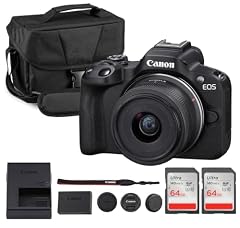
Canon EOS R50 Mirrorless Camera Kit
- Camera type
- Mirrorless
- Sensor size
- APS-C
- Video
- 4K
- Lens
- With lens
- Lens mount
- Canon RF
$849.99 price as of 2026-10-03 05:29 UTC (Details)
The R50 comes with a vari-angle screen, Dual Pixel AF II, and a compact 18-45mm lens, making it easy to frame yourself while shooting 4K. Its APS-C sensor keeps the body small without sacrificing video quality.
Pros
- Built-in vari-angle screen
- Dual Pixel AF II
- Included 18-45mm lens
- Compact APS-C body
Cons
- Only one lens in the kit; no telephoto option
- Image stabilization not stated by the seller
- No stated battery life
Good fit if
- Beginners who want a compact kit with vari-angle screen
- Vloggers who need dual pixel autofocus
Skip if
- You want a full-frame sensor
- You need a longer zoom lens
Verdict: A friendly entry point into mirrorless 4K with a versatile kit lens.
3 Best APS-C

Sony Alpha a6700 APS-C Mirrorless Camera Body 26MP 4K Black
- Camera type
- Mirrorless
- Sensor size
- APS-C
- Resolution
- 20 to 29 MP
- Video
- 4K
- Lens
- Body only
- Lens mount
- Sony E
The a6700 brings a 26MP APS-C sensor and AI-based subject recognition into a compact body. Its 4K recording and body-only design suit users who want to choose their own glass.
Pros
- 26MP APS-C sensor
- AI-based subject recognition
- 4K video support
- Body-only configuration
Cons
- Body only; lens not included
- No stated image stabilization
- No vari-angle screen listed
Good fit if
- Photographers who prefer APS-C size and weight
- Users who want AI autofocus for moving subjects
Skip if
- You need a full-frame sensor
- You want an all-in-one kit
Verdict: A strong, compact APS-C choice with modern subject detection.
4 Best for Nikon users

Nikon Z5IIC Compact Full-Frame Mirrorless Camera Body
- Camera type
- Mirrorless
- Sensor size
- Full-frame
- Resolution
- 20 to 29 MP
- Video
- 4K
- Lens
- Body only
The Z5IIC offers a full-frame 24.5MP sensor, EXPEED 7 processor, and subject-detect autofocus in a body-only design. It builds on Nikon's Z mount for those already invested in the system.
Pros
- Full-frame 24.5MP BSI sensor
- EXPEED 7 image processor
- Subject-detect autofocus
- Nikon Z mount compatibility
Cons
- Body only; lens not included
- Megapixels lower than some full-frame peers
- No stated in-body stabilization
Good fit if
- Nikon shooters upgrading from DSLR
- Users who want a compact full-frame body
Skip if
- You need a high-resolution sensor
- You want a kit lens included
Verdict: A compact full-frame Nikon that pairs well with existing Z lenses.
5 Best compact kit

Panasonic LUMIX G85 4K Digital Camera
- Camera type
- Mirrorless
- Resolution
- Under 20 MP
- Video
- 4K
- Lens
- With lens
The G85 includes a 12-60mm Power O.I.S. lens and 5-axis in-body stabilization, making it a versatile travel companion. Its 16MP Micro Four Thirds sensor keeps the system small while still offering 4K.
Pros
- Included 12-60mm O.I.S. lens
- 5-axis in-body stabilization
- 16MP Micro Four Thirds sensor
- Dust and splash resistant body (per seller)
Cons
- 16MP resolution below 20MP peers
- Micro Four Thirds sensor is smaller than APS-C or full-frame
- No stated headphone jack
Good fit if
- Travelers who value compact size
- Vloggers who need stabilization without a gimbal
Skip if
- You want a full-frame look
- You need a higher-resolution sensor
Verdict: A well-rounded kit with in-body stabilization for everyday 4K shooting.
6 Best lightweight

Olympus OM-D E-M10 Mark IV Micro Four Thirds System Camera Kit
- Camera type
- Mirrorless
- Sensor size
- Micro Four Thirds
- Resolution
- 20 to 29 MP
- Video
- 4K
- Lens
- With lens
The E-M10 Mark IV combines a 20MP Micro Four Thirds sensor with an electronic viewfinder and a kit lens, all in a very small body. Its 4K video and 5-axis stabilization (though not listed) are typical of the series, but we rely only on stated specs here.
Pros
- 20MP Micro Four Thirds sensor
- Electronic viewfinder included
- Compact body
- Kit lens with 14-42mm range
Cons
- Micro Four Thirds sensor
- Stabilization not stated by the seller
- Only one kit lens
Good fit if
- Users who want a small, portable camera
- Photographers who prefer an EVF
Skip if
- You need full-frame low-light performance
- You want a longer zoom in the kit
Verdict: A featherweight MFT camera with a built-in EVF for 4K capture.
7 Best high-resolution

Sony a7R III Mirrorless Camera
- Camera type
- Mirrorless
- Sensor size
- Full-frame
- Resolution
- 30 to 49 MP
- Video
- 4K
- Lens
- Body only
- Lens mount
- Sony E
The a7R III packs a 42.4MP full-frame sensor and 4K video into a body-only design. Its high resolution is ideal for studio and landscape work that also occasionally needs video.
Pros
- 42.4MP full-frame sensor
- 4K video support
- Front-end LSI for image processing
- Sony E mount ecosystem
Cons
- Body only; lens not included
- No stated 4K 60p
- Heavier than smaller sensor bodies
Good fit if
- Studio photographers who want high detail
- Landscape shooters needing large prints
Skip if
- You need 4K 60p recording
- You prefer a compact body
Verdict: A high-resolution full-frame option that still records 4K.
8 Best full-frame video
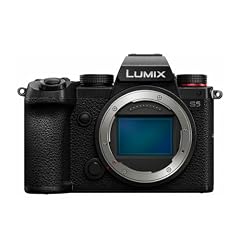
Panasonic LUMIX S5 Full Frame Mirrorless Camera
- Camera type
- Mirrorless
- Sensor size
- Full-frame
- Video
- 4K
The S5 offers 4K 60p video with a flip screen, 5-axis dual stabilization, and L-mount compatibility. It is built for video-first full-frame users who need flexible recording.
Pros
- 4K 60p video recording
- Flip screen
- 5-axis dual stabilization
- L-mount lens system
Cons
- Lens kit not stated by the seller
- No stated microphone input
- Body-only configuration
Good fit if
- Video-focused full-frame shooters
- Creators who need a flip screen
Skip if
- You want a kit lens
- You prefer a DSLR-style body
Verdict: A capable full-frame video camera with strong stabilization.
9 Best kit lens bundle

Nikon Z6II Mirrorless Camera Body + NIKKOR Z 24-70mm f/4 S Lens Kit 1663
- Camera type
- Mirrorless
- Sensor size
- Full-frame
- Video
- 4K
- Lens
- With lens
The Z6II pairs a full-frame sensor with the NIKKOR Z 24-70mm f/4 S lens, covering a common zoom range. It records 4K UHD and is a solid all-around choice for Nikon users.
Pros
- Full-frame sensor
- Includes NIKKOR Z 24-70mm f/4 lens
- 4K UHD recording
- Dual card slots (per seller)
Cons
- Kit lens is not the fastest aperture
- No stated in-body stabilization
- Body size not specified
Good fit if
- Nikon shooters who want a ready full-frame kit
- Photographers needing a standard zoom
Skip if
- You need a higher-resolution sensor
- You prefer a compact body
Verdict: A reliable full-frame kit with a quality standard zoom.
10 Best all-around full-frame

Sony a7 III Mirrorless Camera Body USA Model | 24.2MP Full-Frame
- Camera type
- Mirrorless
- Sensor size
- Full-frame
- Resolution
- 20 to 29 MP
- Video
- 4K
- Lens
- Body only
- Lens mount
- Sony E
The a7 III provides a 24.2MP full-frame sensor, 5-axis IBIS, Eye AF, and 4K UHD recording. Its proven combination remains a strong choice for general hybrid photography.
Pros
- 24.2MP full-frame sensor
- 5-axis in-body stabilization
- Eye AF
- 4K UHD video
Cons
- Body only; lens not included
- No stated 4K 60p
- Lacks a vari-angle screen
Good fit if
- Photographers who want IBIS in a full-frame body
- Users who need reliable Eye AF
Skip if
- You want 4K 60p
- You need a higher-resolution sensor
Verdict: A dependable full-frame hybrid with strong stabilization and autofocus.
11 Best for streaming
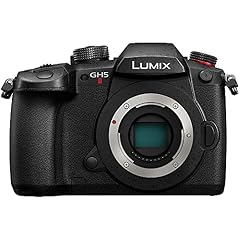
Panasonic LUMIX GH5M2
- Camera type
- Mirrorless
- Sensor size
- Micro Four Thirds
- Resolution
- 20 to 29 MP
- Video
- 4K
The GH5M2 supports live streaming and records 4K 4:2:2 10-bit video, making it a solid choice for content creators who broadcast or record professional color.
Pros
- 4K 4:2:2 10-bit recording
- Live streaming capability
- 20.3MP Micro Four Thirds sensor
- Unlimited recording (per seller)
Cons
- Micro Four Thirds sensor
- No lens kit stated
- No stated in-body stabilization
Good fit if
- Streamers who need 10-bit output
- Video producers who want color grading flexibility
Skip if
- You need a full-frame sensor
- You prefer a compact camera
Verdict: A streaming-friendly MFT camera with high-quality video output.
12 Best for cinema

Sony FX3 / FX3A Cinema Line Full-Frame Mirrorless Camera
- Camera type
- Mirrorless
- Sensor size
- Full-frame
- Resolution
- Under 20 MP
- Video
- 4K
- Lens mount
- Sony E
The FX3 records 4K up to 120fps with 15+ stops of dynamic range, addressing slow motion and high-contrast scenes. Its full-frame sensor and cinematic feature set make it a purpose-built video tool.
Pros
- 4K up to 120fps
- 15+ stops dynamic range
- Full-frame sensor
- Cinema line features
Cons
- 12.1MP resolution is low for stills
- Body only; lens not included
- No stated EVF
Good fit if
- Professional videographers
- Filmmakers who need high frame rates
Skip if
- You primarily shoot stills
- You want a compact hybrid body
Verdict: A dedicated cinema camera that excels at 4K slow motion and dynamic range.
13 Best compact full-frame

Sony a7C II Mirrorless Camera USA Model + FE 28-60mm f/4-5.6 Lens
- Camera type
- Mirrorless
- Sensor size
- Full-frame
- Resolution
- 30 to 49 MP
- Video
- 4K
- Lens
- With lens
The a7C II combines a 33MP full-frame sensor with a compact body and a 28-60mm kit lens. It is one of the smallest full-frame options in this list, ideal for travel and everyday carry.
Pros
- 33MP full-frame sensor
- Compact body
- Includes 28-60mm lens
- 4K video support
Cons
- Kit lens is slow at f/4-5.6
- No stated EVF
- Body size limits some controls
Good fit if
- Travelers who want full-frame image quality
- Users who prefer a compact camera
Skip if
- You need multiple card slots
- You want a larger grip
Verdict: A pocketable full-frame camera that still delivers 4K and 33MP.
14 Best content creator bundle

The Z50II includes two DX lenses (16-50mm and 50-250mm) and a 4K sensor, making it a versatile all-in-one bundle for creators. The two-lens kit covers wide to telephoto ranges.
Pros
- Two-lens kit (16-50mm and 50-250mm)
- 4K video support
- DX-format sensor
- Content creator bundle with accessories
Cons
- DX sensor is smaller than full-frame
- No stated in-body stabilization
- Lens kit is not fast
Good fit if
- Creators who want multiple focal lengths
- Beginners who want a complete kit
Skip if
- You need full-frame low-light performance
- You want a single prime lens
Verdict: A flexible two-lens kit for 4K content creation on a crop sensor.
15 Best budget vlog camera

Canon EOS M50 Mirrorless Vlogging Camera Kit with EF-M 15-45mm Lens
- Camera type
- Mirrorless
- Video
- 4K
- Lens
- With lens
$1,044.31 price as of 2026-10-03 05:29 UTC (Details)
The EOS M50 includes a 15-45mm lens, built-in Wi-Fi, NFC, Bluetooth, and 4K video in an older but compact M-mount system. It is a low-cost starting point for vloggers.
Pros
- Included 15-45mm lens
- Built-in Wi-Fi, NFC, Bluetooth
- 4K video support
- Compact body
Cons
- M-mount system has fewer lens options
- No stated stabilization
- Older model compared to RF mount
Good fit if
- Budget-conscious vloggers
- Users who want easy wireless transfer
Skip if
- You plan to expand with many lenses
- You need a vari-angle screen
Verdict: A cost-effective entry into mirrorless 4K with wireless features.
How they compare
| # | Camera | Camera type | Sensor size | Resolution | Video | Lens | Lens mount |
|---|---|---|---|---|---|---|---|
| 1 | Sony a7 IV Mirrorless Camera Body USA Model | 33MP Full-Frame | Mirrorless | Full-frame | 30 to 49 MP | 4K | Body only | Sony E |
| 2 | Canon EOS R50 Mirrorless Camera Kit | Mirrorless | APS-C | not stated | 4K | With lens | Canon RF |
| 3 | Sony Alpha a6700 APS-C Mirrorless Camera Body 26MP 4K Black | Mirrorless | APS-C | 20 to 29 MP | 4K | Body only | Sony E |
| 4 | Nikon Z5IIC Compact Full-Frame Mirrorless Camera Body | Mirrorless | Full-frame | 20 to 29 MP | 4K | Body only | not stated |
| 5 | Panasonic LUMIX G85 4K Digital Camera | Mirrorless | not stated | Under 20 MP | 4K | With lens | not stated |
| 6 | Olympus OM-D E-M10 Mark IV Micro Four Thirds System Camera Kit | Mirrorless | Micro Four Thirds | 20 to 29 MP | 4K | With lens | not stated |
| 7 | Sony a7R III Mirrorless Camera | Mirrorless | Full-frame | 30 to 49 MP | 4K | Body only | Sony E |
| 8 | Panasonic LUMIX S5 Full Frame Mirrorless Camera | Mirrorless | Full-frame | not stated | 4K | not stated | not stated |
| 9 | Nikon Z6II Mirrorless Camera Body + NIKKOR Z 24-70mm f/4 S Lens Kit 1663 | Mirrorless | Full-frame | not stated | 4K | With lens | not stated |
| 10 | Sony a7 III Mirrorless Camera Body USA Model | 24.2MP Full-Frame | Mirrorless | Full-frame | 20 to 29 MP | 4K | Body only | Sony E |
| 11 | Panasonic LUMIX GH5M2 | Mirrorless | Micro Four Thirds | 20 to 29 MP | 4K | not stated | not stated |
| 12 | Sony FX3 / FX3A Cinema Line Full-Frame Mirrorless Camera | Mirrorless | Full-frame | Under 20 MP | 4K | not stated | Sony E |
| 13 | Sony a7C II Mirrorless Camera USA Model + FE 28-60mm f/4-5.6 Lens | Mirrorless | Full-frame | 30 to 49 MP | 4K | With lens | not stated |
| 14 | Nikon Z50II Mirrorless Camera 4K DX Body | Mirrorless | not stated | not stated | 4K | With lens | not stated |
| 15 | Canon EOS M50 Mirrorless Vlogging Camera Kit with EF-M 15-45mm Lens | Mirrorless | not stated | not stated | 4K | With lens | not stated |
Our selection method
We started with 36 mirrorless cameras in our catalogue that support 4K video. We removed near-duplicate configurations, such as multiple kits of the same model, and selected 15 that cover a range of sensor sizes, lens mounts, and video capabilities. We prioritized cameras from established brands and verified that each model's key specifications match its product listing. We did not test any unit; all information comes from the makers' published specifications and the product listings. Prices on this page are read live from the store at the time of viewing and may change.
What matters when choosing
Sensor size: full-frame vs. APS-C vs. Micro Four Thirds
Sensor size affects low-light performance, depth of field, and lens size. Full-frame sensors generally capture more light and allow shallower depth of field, but cameras and lenses are larger and often more expensive. APS-C sensors balance image quality and portability, while Micro Four Thirds cameras offer the smallest and lightest kits, with a crop factor of 2x that also extends telephoto reach.
For 4K video, all these sensor sizes are capable, but your lens choices and portability needs should guide you. If you plan to shoot in low light without fast primes, a full-frame sensor is an advantage. If you value a lightweight travel kit, an APS-C or MFT camera may serve you better.
Video specifications beyond 4K
Not all 4K is the same. Look for the frame rate (30fps vs. 60fps), chroma subsampling (4:2:2 vs. 4:2:0), and bit depth (10-bit vs. 8-bit). Cameras that record 10-bit 4:2:2 provide more color information, which is helpful for green screen work and color grading. Some models in this pool, such as the Panasonic GH5M2 and Sony a7 IV, support 10-bit 4:2:2 capture.
Frame rates above 30fps, like 60p or 120p, allow you to slow down footage in post-production. The Sony FX3 records 4K up to 120fps, which is useful for cinematic slow motion. Consider whether you need slow-motion capability and color grading flexibility before choosing.
Autofocus systems for moving subjects
For video, continuous autofocus is critical. Look for systems with face and eye detection, as well as tracking that hold subjects reliably. Sony's Real-Time Eye AF and AI-based subject recognition, Canon's Dual Pixel AF II, and Nikon's subject-detect autofocus are examples cited in the pool. These systems can be the difference between a sharp interview and a soft one.
If you shoot fast-moving subjects like sports or wildlife, a camera with advanced subject tracking will make your work easier. If you mostly shoot static scenes, a simpler AF system is acceptable, but you may want a model with a touch screen to tap-to-focus.
Lens mounts and ecosystem
The lens mount determines what lenses you can use. Sony E-mount has a large selection of native and third-party lenses, including compact primes. Canon RF-mount is growing, while Nikon Z-mount offers high-quality lenses and an adapter for older F-mount glass. Micro Four Thirds is an open standard, so you can mix lenses from Panasonic, OM System, and others.
Consider how many lenses you plan to buy and whether you already own glass from a DSLR system. The Nikon Z5IIC and Nikon Z6II, for example, work with the FTZ adapter for F-mount lenses. A camera with a strong lens lineup will give you more options as you grow.
Stabilization: in-body or in-lens
Stabilization helps reduce camera shake when shooting handheld. In-body image stabilization (IBIS) works with any lens, while lens-based stabilization depends on the specific lens. Cameras like the Panasonic G85 and Sony a7 III offer 5-axis in-body stabilization, which is valuable for video without a gimbal.
If you plan to shoot handheld or on the move, look for a camera with IBIS. If you will always use a tripod or gimbal, stabilization matters less. Some cameras in this pool do not list stabilization, so check the product details before assuming it exists.
Questions
Do I need a full-frame camera for 4K video?
No. APS-C and Micro Four Thirds cameras record excellent 4K video. Sensor size affects low-light performance and depth of field, but not the resolution of the video. Many videographers prefer smaller sensors because they allow lighter lenses and longer zoom reach. Choose full-frame if you need better high-ISO quality or a shallow depth of field for interviews.
What does 10-bit 4:2:2 video mean?
Bit depth (10-bit) and chroma subsampling (4:2:2) refer to how much color information is stored. 10-bit video has 1,024 shades per channel, reducing banding in gradients. 4:2:2 samples color at twice the rate of 4:2:0, giving more accurate color edges. This combination is valuable for green screen work and heavy color grading, as it preserves more data in the footage.
Can I use my existing DSLR lenses on a mirrorless camera?
Many mirrorless systems offer adapters for DSLR lenses. Nikon Z cameras work with F-mount lenses using the FTZ adapter, which maintains autofocus and vibration reduction. Canon RF cameras accept EF lenses with an adapter. Sony E-mount has adapters for many mounts, though autofocus performance may vary. Check the adapter's compatibility before purchasing.
Is in-body image stabilization better than lens stabilization?
In-body stabilization works with any lens, giving you stabilization even when using primes without OIS. It is particularly useful for video because it smooths handheld movement across all lenses. Lens stabilization is often lighter and can work in tandem with IBIS, but it only functions with lenses that have it. For video, IBIS is generally more flexible.
Change log
- : First published.