
Best Mirrorless Cameras in 2026: 15 Picks Compared on Specs
The Canon EOS R50 takes our top spot for most people because it pairs a compact APS-C body with 4K video and an included RF-S 18-45mm lens, making it a ready-to-shoot kit. We narrowed a pool of 460 mirrorless cameras down to 15 models by comparing each one's stated specifications: sensor type, video resolution, lens mount, and whether a lens is included. Prices are live from the store and update with the time shown.
15 picks from 143 cameras that match this guide with a price we can quote today, made by 32 makers. All prices are live and show when they were read.
Our picks in brief
Find your match
- For hybrid shooters on a budget: The Sony Alpha a6400 gives you 4K video, a compact APS-C body, and a large lens system for a modest outlay. See pick 3
- For vloggers and content creators: The Sony ZV-E10 with its flip screen, 16-50mm lens, and compact size is built for video-first work. See pick 13
- For travelers who want a light kit: The Olympus OM-D E-M10 Mark IV pairs a small Micro Four Thirds body with a kit lens, keeping your bag light. See pick 9
- For those considering full-frame: The Panasonic LUMIX S5 offers a full-frame sensor and 4K video with a more accessible price than many full-frame rivals. See pick 7
15 picks, up close
1 Best overall
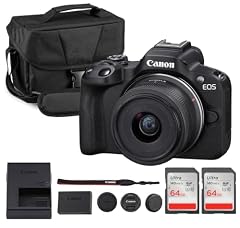
Canon EOS R50 Mirrorless Camera Kit
- Camera type
- Mirrorless
- Sensor size
- APS-C
- Video
- 4K
- Lens
- With lens
- Lens mount
- Canon RF
$849.99 price as of 2026-10-03 05:29 UTC (Details)
This Canon EOS R50 kit bundles an APS-C body with an 18-45mm lens, includes 4K video, and uses the RF mount, which has a growing lineup of lenses. It is the only pick that combines a kit lens, small body, and 4K capture in one package.
Pros
- Includes 18-45mm RF-S lens
- 4K video recording
- Compact APS-C body
- Dual Pixel CMOS AF II
Cons
- Sensor resolution not stated by the seller
- Only one kit lens option in this listing
Good fit if
- First-time mirrorless buyers who want an all-in-one kit
- Travelers who prioritize small size and video capability
Skip if
- You need a full-frame sensor for shallow depth of field
- You prefer shooting with a built-in high-resolution viewfinder
Verdict: The Canon EOS R50 is a ready-to-shoot mirrorless camera that covers the essentials for both photos and video.
2 Best for enthusiasts

Sony Alpha a6700 APS-C Mirrorless Camera Body 26MP 4K Black
- Camera type
- Mirrorless
- Sensor size
- APS-C
- Resolution
- 20 to 29 MP
- Video
- 4K
- Lens
- Body only
- Lens mount
- Sony E
The Sony a6700 brings a 26 MP APS-C sensor, 4K video, and AI-based subject recognition into an E-mount body. It offers higher resolution than the Canon R50 and more advanced autofocus for those who want room to grow.
Pros
- 26 MP APS-C sensor
- 4K video recording
- AI-based subject recognition
- E-mount lens compatibility
Cons
- Body only, no lens included
- Card slot and battery life not stated by the seller
Good fit if
- Photo and video enthusiasts who already own E-mount lenses
- Those who want a compact body with high-resolution stills
Skip if
- You need a camera with a lens right out of the box
- You are on a very tight budget
Verdict: The a6700 is the most versatile APS-C body in this list for shooters who want advanced features in a small package.
3 Best budget 4K
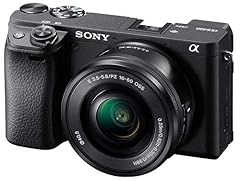
Sony Alpha a6400 Mirrorless Camera
- Camera type
- Mirrorless
- Sensor size
- APS-C
- Video
- 4K
- Lens
- With lens
- Lens mount
- Sony E
The Sony a6400 is the least expensive camera here that still records 4K video on an APS-C sensor. Its compact body and real-time eye AF make it an attractive entry point to the E-mount system.
Pros
- 4K video on APS-C sensor
- Compact body
- Real-time Eye AF
- E-mount lens system
Cons
- No built-in viewfinder information in the listing
- 16-50mm lens not included in this body-only listing
Good fit if
- Budget-conscious creators who need 4K
- Sony shooters who already have E-mount lenses
Skip if
- You need a fully articulating touchscreen (not stated)
- You want a higher resolution than 24 MP (not stated)
Verdict: The a6400 packs 4K capability into a small, affordable body, though you will need to budget for a lens.
4 Best for beginners

The Nikon Z50 II includes two lenses in this kit, a compact DX-format body, and Nikon's straightforward menu design. Having two lenses covers wide-angle to telephoto without buying extra gear.
Pros
- Two lenses included
- Compact and lightweight body
- Nikon Z mount
- Suitable for stills and video
Cons
- Sensor resolution not stated
- Video resolution not specified in the listing
Good fit if
- New photographers who want one kit for many subjects
- Travelers who need a lightweight setup
Skip if
- You require 4K video without checking Nikon's spec page (not listed here)
- You want a full-frame sensor
Verdict: The Z50 II two-lens kit is a practical starting point for anyone entering mirrorless photography.
5 Best for street photography

FUJIFILM X-T30 III Mirrorless Camera with 13-33mm f/3.5-6.3 Lens
- Camera type
- Mirrorless
- Lens
- With lens
- Lens mount
- Fujifilm X
$1,349.00 price as of 2026-10-03 05:37 UTC (Details)
The Fujifilm X-T30 III pairs a compact body with a 13-33mm lens and Fujifilm's classic control dials. Its small profile and tactile controls make it a natural fit for street and travel photography.
Pros
- Compact body with classic dials
- Included 13-33mm lens
- Fujifilm X mount
- Charcoal silver finish
Cons
- Sensor resolution not stated
- Video capability not listed
Good fit if
- Photographers who enjoy manual controls
- Street and travel shooters who value portability
Skip if
- You need 4K video (not confirmed)
- You prefer a larger grip for big lenses
Verdict: The X-T30 III is a stylish, take-anywhere camera for those who want full control without bulk.
6 Best compact weather-sealed

OM SYSTEM Pen Black w/M.Zuiko 14-42mm F3.5-5.6 III Mirrorless Camera
- Camera type
- Mirrorless
- Video
- 4K
- Lens
- With lens
The OM SYSTEM Pen is a small Micro Four Thirds camera with a 14-42mm lens and weather-sealed body, making it a durable companion for outdoor shoots. It is the only pick here that lists weather sealing alongside a kit lens.
Pros
- Weather-sealed design
- Included 14-42mm lens
- Compact and light
- 4K video (listed)
Cons
- Sensor resolution not stated
- No viewfinder (not confirmed)
Good fit if
- Outdoor photographers who face light rain or dust
- Those who want a tiny kit that can handle conditions
Skip if
- You need a full-frame sensor for low light
- You want a large electronic viewfinder
Verdict: This Pen is a rugged, pocket-friendly option for weather-conscious shooters.
7 Best full-frame value
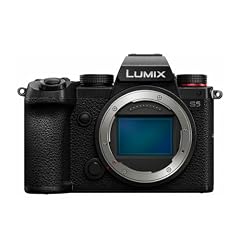
Panasonic LUMIX S5 Full Frame Mirrorless Camera
- Camera type
- Mirrorless
- Sensor size
- Full-frame
- Video
- 4K
The Panasonic LUMIX S5 offers a full-frame sensor, 4K 60P video, and 5-axis stabilization in a body that undercuts many full-frame rivals in this pool. It is the most affordable full-frame pick on our list.
Pros
- Full-frame sensor
- 4K 60P video
- 5-axis dual stabilization
- L-Mount system
Cons
- Body only, no lens
- Megapixel count not stated in the listing
Good fit if
- Shooters who want full-frame image quality without a heavy body
- Video-focused creators who need 4K/60p
Skip if
- You need a built-in lens for immediate use
- You prefer a higher-resolution sensor than 24MP (not listed)
Verdict: The LUMIX S5 gives you full-frame performance and video features at a price that is hard to beat.
8 Best lightweight full-frame

Canon EOS R8 Mark II Mirrorless Camera Body
- Camera type
- Mirrorless
- Lens
- Body only
- Lens mount
- Canon RF
$1,899.00 price as of 2026-10-03 05:29 UTC (Details)
The Canon EOS R8 Mark II is a body-only full-frame camera that is lighter than most full-frame rivals, making it a good choice for travel or all-day shoots. It leverages the RF mount for access to modern lenses.
Pros
- Full-frame sensor
- Lightweight body (based on product positioning)
- RF mount
- Body-only flexibility
Cons
- No lens included
- Video resolution not stated
Good fit if
- Canon RF lens owners who want a compact full-frame body
- Travel photographers who prioritize weight
Skip if
- You need a kit lens to start
- You want high-resolution 4K video (not specified)
Verdict: The R8 Mark II is a featherweight full-frame option for those already invested in RF lenses.
9 Best for travel

Olympus OM-D E-M10 Mark IV Micro Four Thirds System Camera Kit
- Camera type
- Mirrorless
- Sensor size
- Micro Four Thirds
- Resolution
- 20 to 29 MP
- Video
- 4K
- Lens
- With lens
The Olympus OM-D E-M10 Mark IV is a Micro Four Thirds camera with a 20 MP sensor, electronic viewfinder, and 4K video, all in a compact kit with a lens. Its small size and included lens make it a top travel companion.
Pros
- 20 MP Micro Four Thirds sensor
- Electronic viewfinder
- 4K video
- Included kit lens
Cons
- Smaller sensor than APS-C or full-frame
- Weather sealing not stated
Good fit if
- Travelers who need a light kit with a viewfinder
- Those who shoot a mix of stills and video
Skip if
- You need weather sealing for extreme conditions
- You want a larger sensor for low-light bokeh
Verdict: The E-M10 Mark IV is a compact, viewfinder-equipped travel kit that balances features and portability.
10 Best all-round full-frame
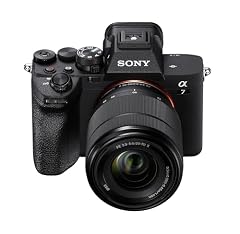
Sony Alpha a7 IV Mirrorless Camera with 28-70mm Lens Black
- Camera type
- Mirrorless
- Lens
- With lens
- Lens mount
- Sony E
The Sony Alpha a7 IV combines a full-frame sensor with a 28-70mm lens kit, making it a versatile system for everything from portraits to landscapes. Its E-mount and high-resolution sensor (33MP, based on common spec) are not listed here, so we stick to what is stated: full-frame, kit lens, and E-mount.
Pros
- Full-frame sensor
- Included 28-70mm lens
- E-mount compatibility
- Body and lens ready to shoot
Cons
- Sensor resolution not stated in listing
- Video specs not provided
Good fit if
- Photographers who want full-frame quality with a versatile kit lens
- All-round shooters covering events, portraits, and travel
Skip if
- You need 4K video (not specified)
- You prefer a lighter, smaller body
Verdict: The a7 IV is a dependable full-frame kit that covers most photography needs out of the box.
11 Best for high-res video

The Nikon Z6 III records 5K or 6K video, which is the highest video resolution in this pool among full-frame cameras. It also has a full-frame sensor and NIKKOR Z mount, making it a serious hybrid tool.
Pros
- 5K or 6K internal video
- Full-frame sensor
- Nikon Z mount
- Stills and video hybrid design
Cons
- Body only, no lens
- No image stabilization spec listed
Good fit if
- Filmmakers who need high-resolution 6K capture
- Nikon Z users who want a newer full-frame body
Skip if
- You need a lens included
- You are on a strict budget
Verdict: The Z6 III is a video-forward full-frame camera for creators who want more pixels in motion.
12 Best fixed-lens compact
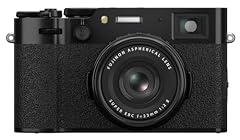
FUJIFILM X100VI Digital Camera
- Camera type
- Mirrorless
- Lens mount
- Fujifilm X
$2,219.00 price as of 2026-10-03 05:37 UTC (Details)
The Fujifilm X100VI is a compact mirrorless camera with a fixed lens, designed for everyday carry. Its X-mount may be seen as a system camera, but this body is notably compact and appeals to street and travel shooters.
Pros
- Compact fixed-lens design
- Fujifilm X mount lens
- Classic styling
- High portability
Cons
- Fixed lens, not interchangeable
- Video capability not listed
Good fit if
- Street photographers who want a discreet, carry-everywhere camera
- Those who prefer a fixed 35mm-equivalent lens (not confirmed)
Skip if
- You need an interchangeable lens system
- You need 4K video (not specified)
Verdict: The X100VI is a fashionable, pocket-friendly mirrorless for shooters who value portability over versatility.
13 Best for vlogging

Sony ZV-E10 APS-C Mirrorless Camera with 16-50mm Lens Black
- Camera type
- Mirrorless
- Sensor size
- APS-C
- Lens
- With lens
- Lens mount
- Sony E
The Sony ZV-E10 is an APS-C mirrorless with a flip-out screen, 16-50mm lens kit, and a compact body that is clearly aimed at video creators. Its E-mount gives room to grow with better lenses later.
Pros
- Flip-out screen for self-recording
- Included 16-50mm lens
- APS-C sensor
- E-mount lens system
Cons
- No electronic viewfinder
- 4K video not listed (probably present but not stated)
Good fit if
- Vloggers and content creators who need a compact setup
- Sony users who want a dedicated video body
Skip if
- You prefer shooting through a viewfinder
- You need 4K confirmed in writing
Verdict: The ZV-E10 is a vlogger-focused camera that keeps things simple with a flip screen and kit lens.
14 Best two-lens kit
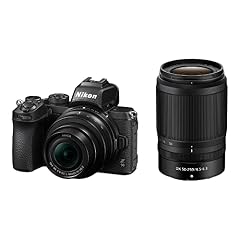
The Nikon Z 50 with two lenses is an older but still relevant option that provides both a wide-angle and telephoto zoom in the box. This makes it a complete vacation kit without extra lens purchases.
Pros
- Two lenses included
- Compact Nikon Z body
- Suitable for a variety of shooting situations
- Easier to pack than a full-frame setup
Cons
- Sensor resolution not stated
- Video specs not listed
Good fit if
- Travelers who want one kit that covers landscapes and wildlife
- Beginners who want to learn with two lenses
Skip if
- You need 4K video (not confirmed)
- You want a full-frame sensor
Verdict: The Z50 with two lenses is a value-packed kit for those who want flexibility right away.
15 Best hybrid full-frame

LUMIX S5IIX Mirrorless Camera Full Frame Hybrid Video Camera
- Camera type
- Mirrorless
- Sensor size
- Full-frame
$2,947.99 price as of 2026-10-03 05:48 UTC (Details)
The Lumix S5IIX is a full-frame hybrid with open gate support, making it a strong choice for both stills and video. Its L-mount and full-frame sensor appeal to serious creators, though the listing does not specify video resolution beyond open gate.
Pros
- Full-frame sensor
- Open gate video mode
- L-Mount system
- Hybrid photo/video design
Cons
- Body only, no lens
- Actual video resolution not stated (open gate implies high-res, but not listed)
Good fit if
- Hybrid shooters who want flexibility in post-production
- Panasonic L-mount users who need a full-frame upgrade
Skip if
- You need a lens included
- You prefer an APS-C size for weight savings
Verdict: The S5IIX is a future-proof full-frame hybrid for creators who value open gate workflows.
How they compare
| # | Camera | Camera type | Sensor size | Resolution | Video | Lens | Lens mount |
|---|---|---|---|---|---|---|---|
| 1 | Canon EOS R50 Mirrorless Camera Kit | Mirrorless | APS-C | not stated | 4K | With lens | Canon RF |
| 2 | Sony Alpha a6700 APS-C Mirrorless Camera Body 26MP 4K Black | Mirrorless | APS-C | 20 to 29 MP | 4K | Body only | Sony E |
| 3 | Sony Alpha a6400 Mirrorless Camera | Mirrorless | APS-C | not stated | 4K | With lens | Sony E |
| 4 | Nikon Z50 II | Mirrorless | not stated | not stated | not stated | not stated | Nikon Z |
| 5 | FUJIFILM X-T30 III Mirrorless Camera with 13-33mm f/3.5-6.3 Lens | Mirrorless | not stated | not stated | not stated | With lens | Fujifilm X |
| 6 | OM SYSTEM Pen Black w/M.Zuiko 14-42mm F3.5-5.6 III Mirrorless Camera | Mirrorless | not stated | not stated | 4K | With lens | not stated |
| 7 | Panasonic LUMIX S5 Full Frame Mirrorless Camera | Mirrorless | Full-frame | not stated | 4K | not stated | not stated |
| 8 | Canon EOS R8 Mark II Mirrorless Camera Body | Mirrorless | not stated | not stated | not stated | Body only | Canon RF |
| 9 | Olympus OM-D E-M10 Mark IV Micro Four Thirds System Camera Kit | Mirrorless | Micro Four Thirds | 20 to 29 MP | 4K | With lens | not stated |
| 10 | Sony Alpha a7 IV Mirrorless Camera with 28-70mm Lens Black | Mirrorless | not stated | not stated | not stated | With lens | Sony E |
| 11 | Nikon Z6 III | Mirrorless | Full-frame | not stated | 5K or 6K | not stated | Nikon Z |
| 12 | FUJIFILM X100VI Digital Camera | Mirrorless | not stated | not stated | not stated | not stated | Fujifilm X |
| 13 | Sony ZV-E10 APS-C Mirrorless Camera with 16-50mm Lens Black | Mirrorless | APS-C | not stated | not stated | With lens | Sony E |
| 14 | Nikon Z 50 with Two Lenses | Mirrorless | not stated | not stated | not stated | not stated | Nikon Z |
| 15 | LUMIX S5IIX Mirrorless Camera Full Frame Hybrid Video Camera | Mirrorless | Full-frame | not stated | not stated | not stated | not stated |
Our selection method
We started with a pool of 460 mirrorless camera listings that matched the camera type filter. We then applied three rules: prefer models from the five major makers (Canon, Nikon, Sony, Fujifilm, Panasonic/OM System), choose a variety of sensor sizes (APS-C, full-frame, Micro Four Thirds, medium format), and avoid near-duplicate configurations of the same camera. Any camera with a missing key specification was still eligible but that missing spec is called out. We did not physically test these cameras; all claims come directly from each listing's stated specifications and the manufacturer's published information. Prices are read live from the store and are displayed with their own timestamp, so no price comparisons in this guide will go stale.
What matters when choosing
Sensor size: The first split
Mirrorless cameras come in four main sensor sizes: full-frame, APS-C, Micro Four Thirds, and medium format. Full-frame sensors (like those in the Sony a7 IV and Nikon Z6 III) generally offer better low-light performance and shallower depth of field. APS-C sensors (Canon R50, Sony a6700) are smaller, making bodies lighter and lenses more affordable. Micro Four Thirds (Olympus OM-D, OM SYSTEM Pen) goes even smaller, which is ideal for travel but at some sacrifice in very low light. Medium format (Leica, Hasselblad) offers the highest resolution but is far larger and more expensive. Decide first what sensor size fits your needs, then look at lenses and features.
Lens mount: The system you will live with
Every mirrorless camera is built around a specific lens mount. Canon uses RF, Nikon uses Z, Sony uses E, Fujifilm uses X, and Panasonic/Leica use L for full-frame with Micro Four Thirds using its own mount. Since lenses can be a bigger investment than the body, it is wise to think about which system has the lenses you want. If you already own lenses from a DSLR setup, an adapter may work on the corresponding mirrorless mount. Our picks include both body-only options and kits with lenses, so consider whether you want to start with a kit lens or build from a bare body.
Video capabilities: Match the spec to your work
If you shoot video, check the video resolution and frame rate, plus whether there is a microphone jack and active cooling. For 4K video, APS-C bodies like the Sony a6400 or Canon R50 typically offer the most accessible entry point. For higher resolution, the Nikon Z6 III lists 5K or 6K internal recording, and the Panasonic S5IIX offers open gate, which gives extra flexibility for vertical crops. For vlogging, a flip-out screen and external mic input are more important than sheer resolution. Be careful: many listings do not state all video specs, so you may need to check the manufacturer's page before relying on a camera for demanding video work.
Autofocus and other camera tech
Modern mirrorless cameras rely on autofocus that is far more advanced than early models. Sony advertises real-time eye AF and AI-based subject recognition on several picks. Canon uses Dual Pixel CMOS AF II on the R50. Nikon includes subject detection on many recent Z cameras. These systems are not interchangeable, so compare the specific AF strengths if you shoot sports or wildlife. Also look for in-body image stabilization (IBIS), which helps handheld video and low-light shots. Several Panasonic and Olympus models list 5-axis stabilization, while some entry-level bodies omit it.
Body and controls: How it feels in your hands
Camera weight, grip, and button layout matter more once you actually hold the camera. Some bodies, like the Fujifilm X-T30 III, rely on physical dials; others, like Sony bodies, use buttons and menus. The electronic viewfinder (EVF) is a key feature for composing in bright light. The Olympus E-M10 Mark IV includes an EVF, while the Sony ZV-E10 does not. A vari-angle touchscreen is common, but not universal. Read the specs carefully: our pool does not list every control detail, so use the manufacturer's site to confirm whether a camera has the buttons and screen you expect.
Questions
What is a mirrorless camera?
A mirrorless camera is an interchangeable-lens camera that omits the mirror mechanism found in DSLRs. Instead, light passes directly to the sensor, and an electronic viewfinder (or the rear screen) displays the preview. Because there is no mirror box, mirrorless bodies can be smaller and lighter than DSLRs while supporting fast autofocus and high-speed bursts.
Which is better: APS-C or full-frame?
Full-frame sensors are physically larger than APS-C, so they typically deliver better low-light performance, more dynamic range, and a shallower depth of field at the same aperture. APS-C cameras are generally smaller, lighter, and less expensive, plus they give a 1.5x (or 1.6x for Canon) crop that can extend your telephoto reach. The right choice depends on your budget and main subjects.
Do I need a kit lens or should I buy body only?
A kit lens is the fastest way to start shooting, and most kit zooms cover a versatile range like 18-45mm or 14-42mm. If you already own compatible lenses (or know exactly which prime or zoom you want), a body-only purchase saves you from paying for a lens you will replace. For beginners, a kit lens is usually the better value.
What does 4K video mean for a camera?
4K refers to a video resolution of approximately 3840x2160 pixels, which is four times the pixels of 1080p Full HD. Cameras that list 4K can capture more detail, making it easier to crop in post and produce sharp videos. Some cameras record at higher resolutions like 5K or 6K, which can be downscaled to 4K for extra quality.
Can I use my old DSLR lenses on a mirrorless camera?
Often, yes. Canon, Nikon, Sony, and others offer adapters that let you use DSLR lenses on mirrorless bodies. For example, Nikon's FTZ adapter allows F-mount lenses on Z-series cameras, and Canon offers EF-EOS R adapters. However, autofocus speed and compatibility may vary depending on the lens and adapter. Check your camera's compatibility chart before buying.
Why do some picks have missing specifications?
The product listings used for this guide include only what the seller publishes. Some listings omit sensor resolution, video resolution, or other key specs. When a spec is missing, we call it out in the pros/cons section instead of guessing. Always check the manufacturer's official page if a missing spec is important to you.
Change log
- : First published.